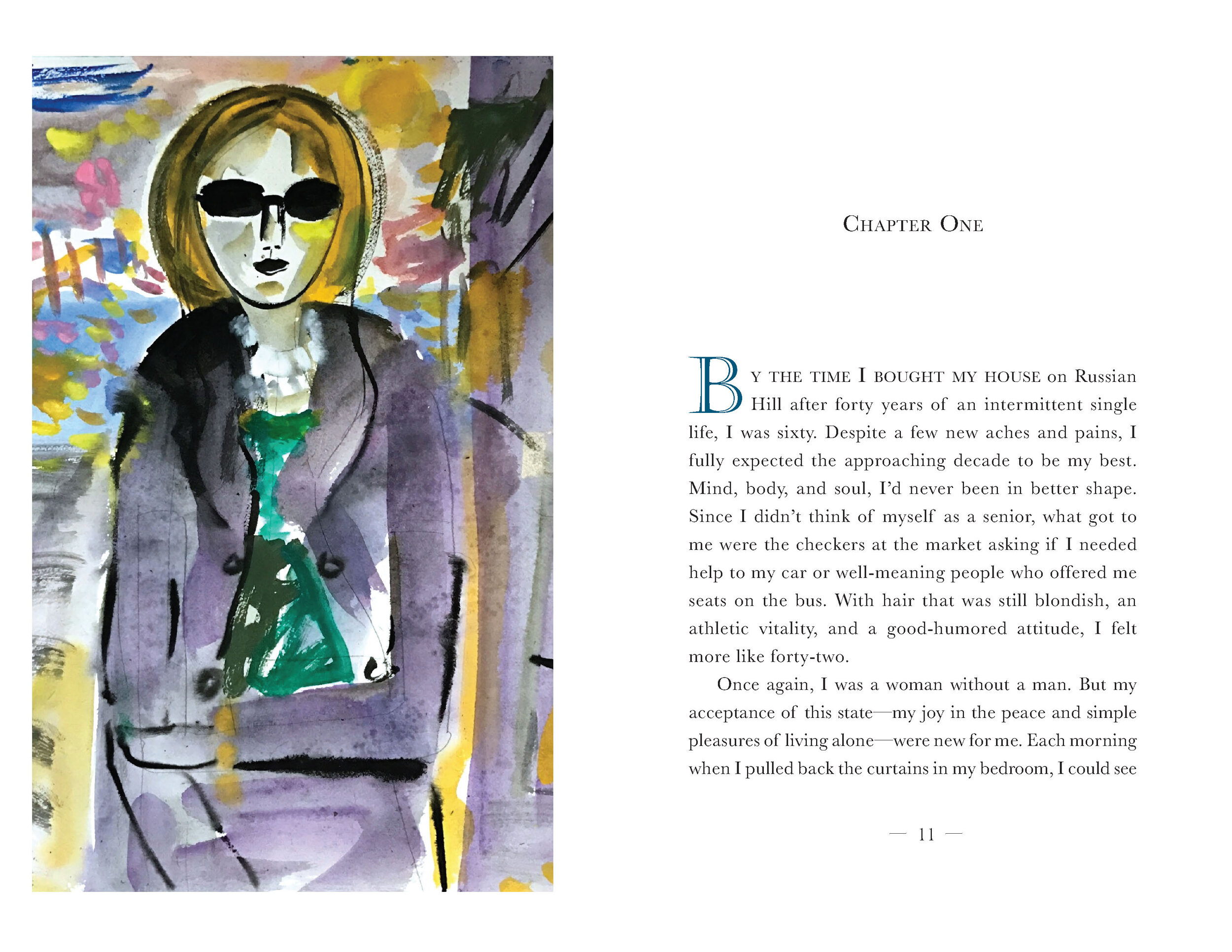
By the time I bought my house on Russian Hill, after forty years of an intermittent single life, I was sixty. Despite a few new aches and pains, I fully expected the approaching decade to be my best. Mind, body and soul, I’d never been in better shape. Since I didn’t think of myself as a senior, what got to me were the checkers at the market asking if I needed help to my car or well-meaning people who offered me seats on the bus. With hair that was still blondish, an athletic vitality, and a good-humored attitude, I felt more like forty-two.
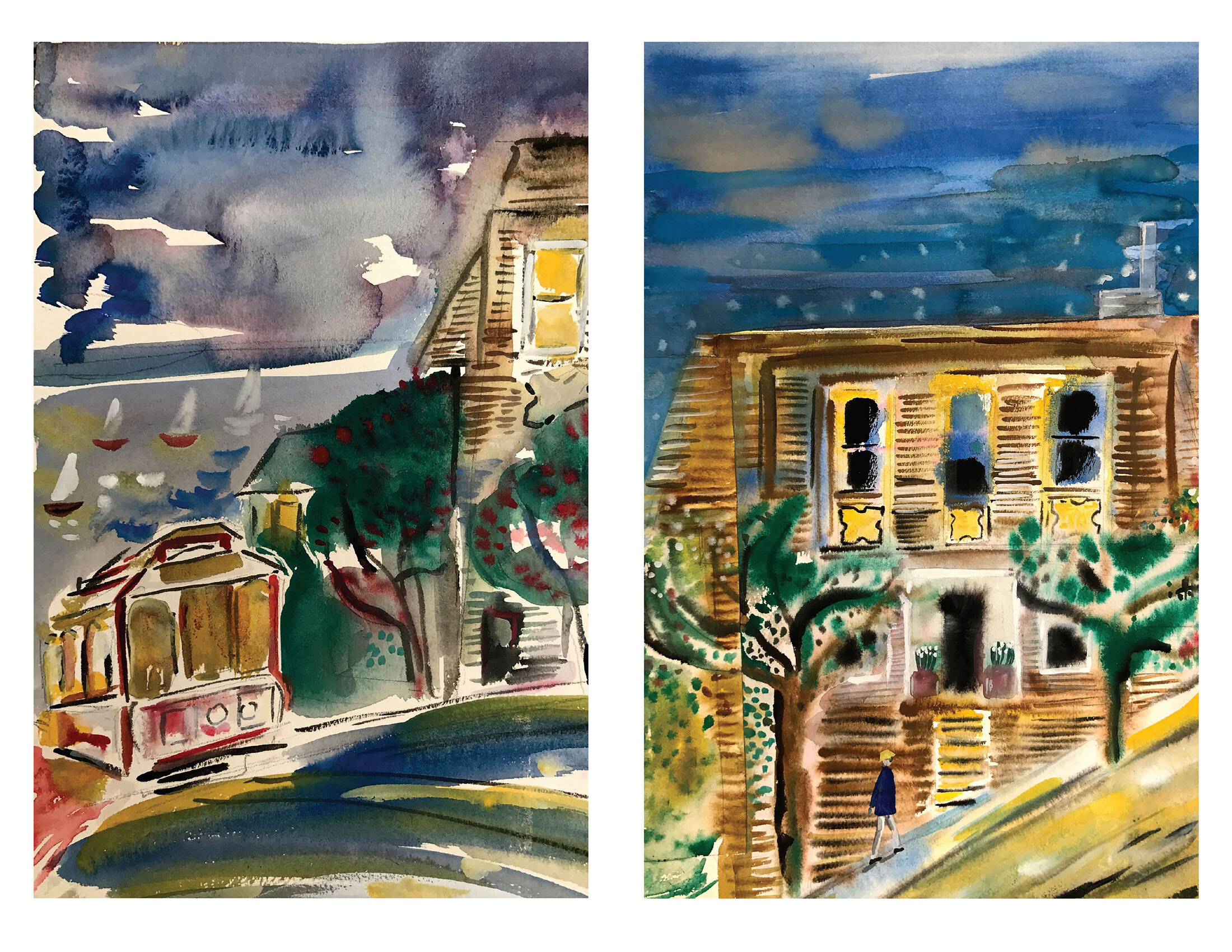
Once again I was a woman without a man. But my acceptance of this state—my joy in the peace and simple pleasures of living alone—were new for me. Each morning when I pulled back the curtains in my bedroom, I could see San Francisco Bay stretching before me with ships gliding in and out of the Golden Gate, while my two snowy ragdoll cats purred in the warm white folds of my covers.
In 1896 my gray wooden row house had been built for a sea captain. During the fifteen years I’d rented it, it had been the scene of considerable fun, a couple of failed attempts at romance and a lot of deferred maintenance. When it went on the market after I had just extricated myself from a disastrous four-year relationship, I pounced. I planned to live in it alone rather than sharing my life with another man who didn’t stack up.
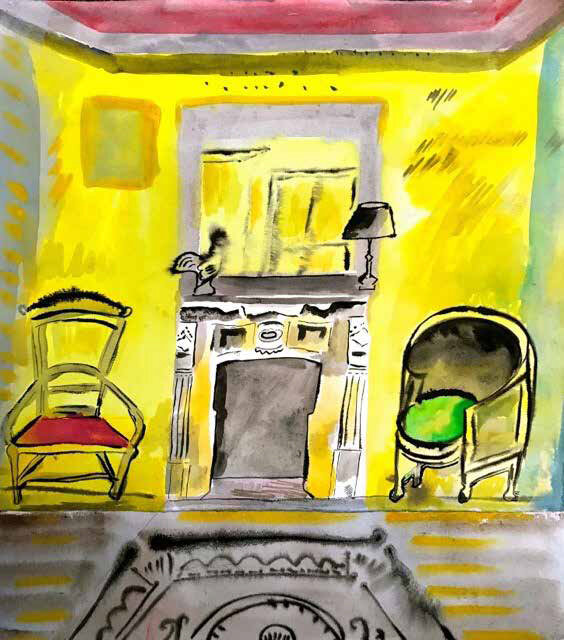
Now that I owned my house, I made it fully mine, doing everything I’d dreamed about, making it a welcoming place for the friends and house guests who filled my life. The living room, just off my little back garden had been lacquered red for years, just like my mother’s.My dinners were more casual and fun than my mother’s. Hers tended to be boozy, heavy and creamy. Mine were easy going and lighter, with fish or good red meat, lots of vegetables, salads and fruit. While I served my guests wine, I no longer drank it myself, having given up alcohol when I was forty, after nearly letting it wreck my life. I cooked with ingredients my mother had never used—fennel, radicchio, hunks of aged cheeses, and essentials like good extra virgin olive oil and varied vinegars. She’d resorted to shortcuts out of a can or the freezer; I made food from scratch. Men wore neckties to her dinners and her guests didn’t include writers, teachers, black smiths, artists, gay men and women, or chefs, but she did invite Alan Watts and Dianne Feinstein along with political types and theater people.
As a renter, I had cooked in my fifty-year old kitchen, testing recipes for several cookbooks I’d written and for dinner parties. It was beyond ready for a renovation and definitely needed more than the one heavily over-loaded electrical outlet. With the help of an architect friend, the room was transformed. We kept the black and white tile floor, and brought the electricity up to code, adding a commercial stove, a farm-house kitchen sink and marble counters. A glass chandelier provided a certain sparkle. At last the room that was the center of my life and my work as a food writer was ideal for me and the food-loving friends who cooked there with me. I’d met many of them in the late 1990’s when I started writing about food for Saveur Magazine, and other publications. They were my people. But others went all the way back—
I painted it a more subtle color--a sophisticated grayish brown that warmed up at night in the light that glowed from the fireplace and candles and lamps with mica shades. With my bookcases completely filled, I stacked the overflowing books everywhere, with vases of flowers and little treasures perched on top of them.
With the aid of my stylish, opinionated friend Randal Breski, who has an unerring eye and who, like me, had lived and shopped in Paris, I chose fabrics and paints for the rest of the house. We made the dining room feel French with pale green walls and taffeta curtains. On summer evenings, a low gold light streamed across the old hardwood floors and my mother’s mahogany dining table that could seat up to eighteen. Winter dinners were candlelit.
My dinners were more casual and fun than my mother’s. Hers tended to be boozy, heavy, and creamy. Mine were easy going and lighter, with fish or good red meat, lots of vegetables, salads, and fruit. While I served my guests wine, I no longer drank it myself, having given up alcohol when I was forty, after nearly letting it wreck my life. I cooked with ingredients my mother had never used—fennel, radicchio, hunks of aged cheeses, and essentials like good extra virgin olive oil and varied vinegars. She’d resorted to shortcuts out of a can or the freezer; I made food from scratch. Men wore neckties to her dinners and her guests didn’t include writers, teachers, blacksmiths, artists, gay men and women, or chefs, but she did invite Alan Watts and Dianne Feinstein along with political types and theater people.
As a renter, I had cooked in my fifty-year-old kitchen, testing recipes for several cookbooks I’d written and for dinner parties. It was beyond ready for a renovation and definitely needed more than the one heavily over-loaded electrical outlet. With the help of an architect friend, the room was transformed. We kept the black and white tile floor, and brought the electricity up to code, adding a commercial stove, a farmhouse kitchen sink and marble counters. A glass chandelier provided a certain sparkle. At last, the room that was the center of my life and my work as a food writer was ideal for me and the food-loving friends who cooked there with me. I’d met many of them in the late 1990s when I started writing about food for Saveur Magazine, and other publications. They were my people. But others went all the way back. ————